Winter style can become complicated very quickly. You start with a beautiful outfit, then you remember that it is cold. By the time you leave home, the outfit you imagined has disappeared under seven layers.
This is exactly why I prefer winter outfit formulas. Instead of reinventing my wardrobe every morning, I rely on combinations that already make sense: warm enough for real life, comfortable enough for commuting, walking, working, or spending an entire day out, and polished enough that I still feel like myself. Because winter elegance should make getting dressed easier.
It shouldn't require an enormous wardrobe, twenty complicated layers, or choosing between looking good and staying warm. The best winter outfits usually come from a strong base, one useful outer layer, and accessories that add personality.
Here are five formulas I would happily repeat all season.
1. Fine Knit + Tailored Trousers + Long Wool Coat + Pointed Boots
This is probably my ultimate winter uniform.
Start with a fine knit: a crewneck, turtleneck, or lightweight merino sweater, depending on the temperature.
Then add tailored trousers: wide-leg trousers work particularly well because they create such a beautiful long silhouette underneath a coat, but straight-leg versions can be equally elegant.
Finish with a long wool coat and pointed ankle boots.
Simple. The coat can do most of the visual work.
Choose charcoal gray for something timeless, navy for a softer alternative to black, chocolate brown for warmth, or herringbone for texture. Then add gloves, sunglasses, and a structured bag.
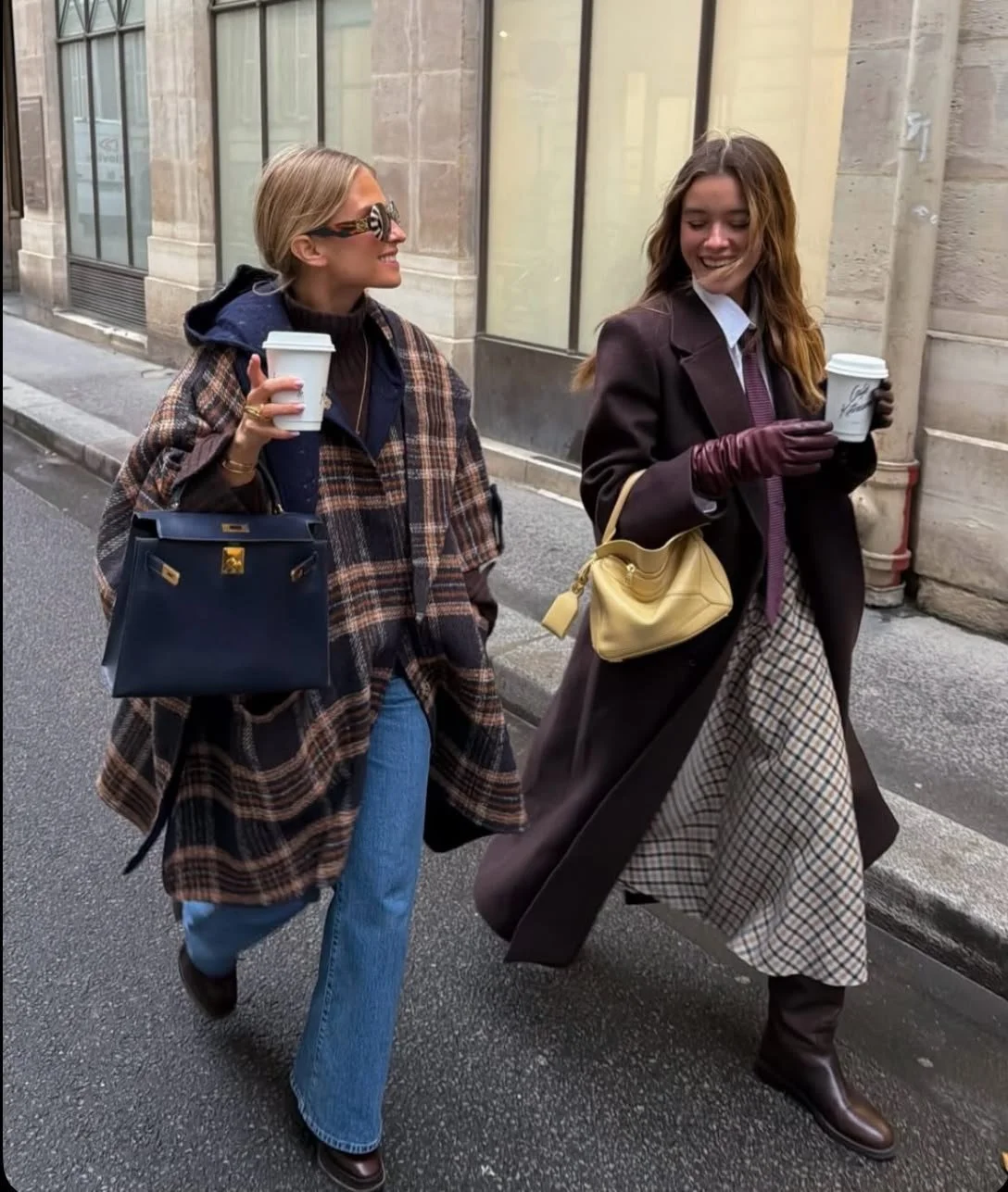
One of my favorite details from the inspiration for this post is using leather gloves as an actual styling element, rather than treating them as something purely practical.
Camel gloves with navy.
Mustard gloves with gray.
Burgundy with brown.
Purple with charcoal.
A tiny color decision can completely change a winter outfit.
If you are building the layers underneath, my guide to the best fall knitwear for women is a natural place to start. Fine-gauge knitwear is especially useful here because it gives warmth without making the coat feel restrictive.

2. Blazer + Knit + Wide-Leg Trousers + Scarf + Coat
For office days, winter layering becomes incredibly useful.
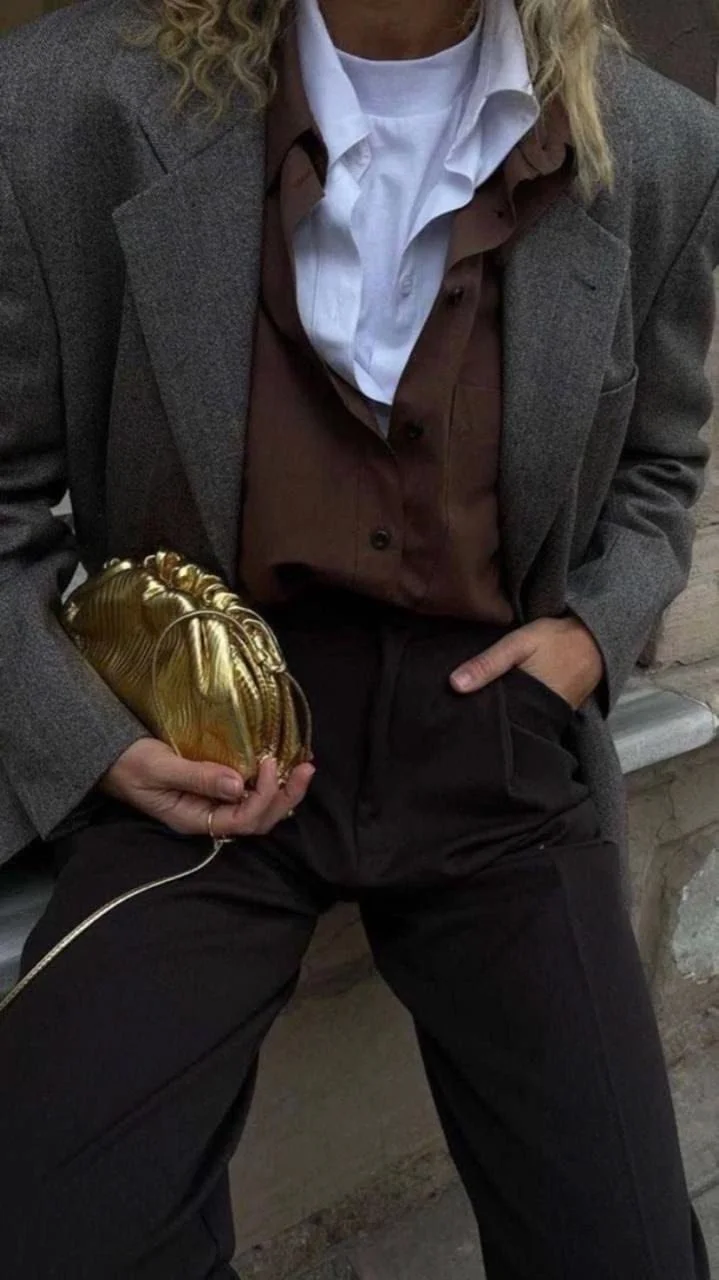
Start with a T-shirt, thin long-sleeved top, or lightweight knit, add tailored trousers, then layer a wool blazer over the top.
If it is genuinely cold, add your long coat as the final layer. A scarf adds another layer of warmth without needing a heavy sweater underneath.
This works especially well when the colors live in the same family: gray knit + charcoal blazer + dark trousers, brown blazer + chocolate trousers + cream knit, navy blazer + gray trousers + burgundy scarf. But don't be afraid of contrast either: one of the things I love most in the winter inspiration I save is pairing classic tailoring with slightly unexpected accessories: a beret, long gloves, a scarf wrapped almost dramatically around the neck, a colorful bag, or a tie under a blazer.
The tailoring creates structure, so the styling around it can have more personality. If you want more ways to play with that balance, this formula connects perfectly with my guide on how to style a blazer for work, weekends, and dinner.


3. Midi Skirt + Knitwear + Long Coat + Knee-High Boots
Winter does not have to mean trousers every day. A midi skirt can actually be one of the easiest cold-weather pieces to style because you can layer underneath it without changing the silhouette.
Start with a fine knit or turtleneck, add your skirt, then wear knee-high boots underneath. Depending on the temperature, tights can add another layer without being visible. Finish with a long wool coat.
I particularly love this formula with skirts that have movement or texture. Even a printed skirt can work beautifully when the rest of the outfit stays simple.
A chocolate coat with a checked midi skirt.
A navy coat with a dark satin skirt.
A gray coat with burgundy accessories.
The skirt adds femininity, while the coat creates structure.
And if you prefer more coverage around your legs, this is a beautiful alternative to forcing yourself into something that doesn’t make you feel comfortable. Elegance works much better when you are not spending the entire day thinking about the part of your outfit that makes you insecure.
4. Jeans + Layered Knitwear + Practical Jacket or Coat + Loafers or Boots
Not every elegant winter outfit needs tailored trousers: some days call for denim.
The trick is making the layers around it feel intentional: start with your favorite jeans, add a white T-shirt or shirt, then a V-neck knit, cardigan, or crewneck, and finish with a jacket or coat with enough structure to elevate the denim.
A quilted jacket can work beautifully for mild days.
A wool jacket adds polish.
A classic long coat immediately makes denim feel more sophisticated.
Then play with the accessories: a burgundy handbag, brown loafers, a patterned scarf, leather gloves, a brooch, or sunglasses.
The inspiration I love for this formula often combines incredibly ordinary pieces- jeans, knitwear, a coat- with one or two details that make the outfit feel personal. This is also where layering becomes practical, not decorative.
If you move between cold streets, heated public transport, shops, and offices, having layers you can actually remove is much more useful than one enormous sweater.
My how-to-layer-clothes-for-fall guide translates beautifully into winter with slightly warmer fabrics and heavier outerwear.

5. Monochrome Base + Statement Outerwear + Unexpected Accessories
This is my favorite formula for the days when I want to look like I made much more effort than I actually did.
Create a very simple base: black trousers + black knit, chocolate trousers + brown knit, navy trousers + navy top, gray from top to bottom. Then let the coat or accessories add personality: a herringbone coat, a shaggy textured jacket, a structured cream coat, a beautiful cape, or a strong leather jacket under a scarf.
Now add something unexpected: purple gloves, a colorful pillbox-style hat or beret, a burgundy clutch, a silk scarf, a large brooch, a statement necklace, even an oversized pair of sunglasses.
One of the most beautiful things about winter is that accessories become part of the actual outfit; they are not optional decoration.
You need warmth anyway, so why not make the practical pieces interesting? A scarf can create color. Gloves can completely change a neutral coat. A hat can make the simplest outfit memorable. This is exactly how I like winter style to work.
Functionality first, then personality.


Winter Elegance Starts With the Outer Layer
One thing becomes obvious when you look at winter outfits in real life: most people will notice the coat. If you are outside, commuting, walking around the city, or going from one place to another, your coat may be visible far longer than whatever blouse is underneath it.
That is why outerwear deserves attention: you do not need ten coats, but the ones you own should work hard: a long wool coat, a slightly shorter structured jacket, something practical for rain or casual days, maybe one more expressive option if outerwear is something you genuinely enjoy, and a coat that works with most of your wardrobe makes everything underneath easier. It is also why I prefer investing strategically in outerwear rather than constantly buying new tops nobody sees for half the day anyway.
Use Accessories to Make Repeated Outfits Feel New
This is where a smaller winter wardrobe can become much more interesting.
Imagine the same gray coat: one day you wear it with black gloves and a black scarf; another day with burgundy leather gloves; another with a camel scarf and a brown bag; then with a brooch; then with a colorful hat.
Same coat, completely different feeling.
This is also why I love scarves so much in winter: wear one traditionally around your neck, wrap it over your head on windy days, drape a knit over your shoulders, add a silk scarf underneath a wool one, play with texture.
Accessories let you repeat your strongest wardrobe pieces without feeling like you are recreating the same outfit.
Do Not Be Afraid of Color and Texture in Winter
Your winter wardrobe does not need to become a black hole from November until March.
Black is wonderful, so are gray, brown, cream, and navy, but color works beautifully against winter neutrals.
Try burgundy with chocolate, powder blue with brown, purple with gray, mustard with herringbone, forest green with camel, red with navy. Even one colorful accessory can wake up an entire outfit.
I think this is especially useful during the darker months.
Sometimes the simplest way to follow my rule to dress for the mood you want, not the mood you have, is wearing the color even when the weather looks deeply committed to gray.
If you keep the palette simple, texture becomes incredibly important: wool, cashmere, corduroy, velvet, leather, suede, herringbone, tweed, satin, faux fur, or vintage fur if that is already part of your wardrobe. A chocolate outfit made from three different textures is far more interesting than three identical brown fabrics.
This is one reason winter neutrals rarely have to feel boring: you can create contrast without changing color at all.
What to Look for in Winter Pieces
Before adding something new, ask what job it needs to perform: a sweater should layer comfortably underneath your coat, a coat needs enough room for the clothes you genuinely wear beneath it, boots need to survive the amount of walking your actual life requires, a scarf should feel good enough that you do not remove it after three minutes, gloves need to keep you warm, not simply look beautiful in a product photo, and bags need to work with winter outerwear too.
That last point is easy to forget: a tiny shoulder strap that fits beautifully over a blouse in September may become deeply annoying over a thick December coat.
Buy for the woman who will actually wear the item, not the imaginary woman standing perfectly still in a Pinterest photo.
Dressing elegantly every day in winter is not about having an enormous wardrobe.
Once you know the formula you like the most and that makes you feel confident, getting dressed becomes easier, and then you can play. Winter elegance should keep you warm enough to enjoy winter: that matters to me more than creating a technically perfect outfit.
Because there is something wonderful about stepping outside on a freezing morning and realizing you are actually comfortable.
That is the kind of elegance I want from my winter wardrobe.