Few pieces in my wardrobe can change an outfit's energy as quickly as a blazer. Jeans and a T-shirt suddenly look intentional; a romantic dress becomes sharper; a knit-and-denim combination feels polished enough for work. And something as simple as a shirt can become an entire outfit once you add tailoring, jewelry, and the right accessories.
During the transitional season, it’s also like a mid-season jacket; during the colder months, it’s a strategic, beautiful, tailored layer. The blazer is the perfect example of how versatile one piece of clothing can be across seasons, occasions, and aesthetics.
That is why I think a good blazer can actually help you buy fewer clothes. You do not necessarily need another complicated outfit; sometimes you need one reliable layer that changes the perspective of pieces you already own. And despite its reputation, a blazer does not have to mean corporate, formal, or boring.
Looking through the outfits I save for inspiration, I realized the blazers I love most are styled with contrast: menswear with feminine dresses, tailoring with denim, classic checks with playful accessories, crisp shirts with jewelry, even traditional blazers with sporty pieces.
The blazer creates structure: everything around it gets to have a little more fun. Here are seven elegant blazer outfit formulas you can recreate for work, weekends, dinners, and everything in between.
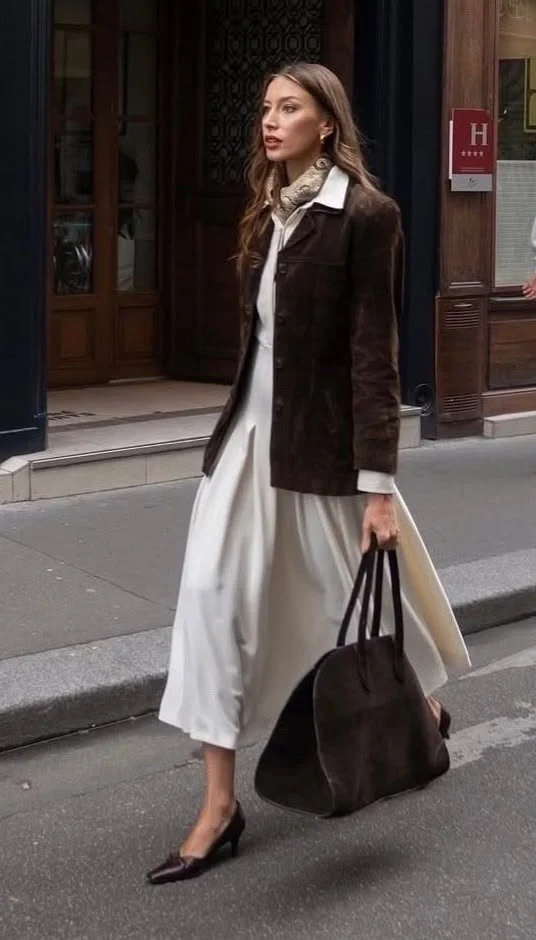
1. Blazer + Midi Dress + Scarf: The Feminine Formula
One of the most beautiful ways to wear a blazer is over a fluid midi dress.
The contrast is what makes it work: the dress brings movement and softness; the blazer adds structure. I especially love this formula with an ivory or cream dress and a chocolate-brown, suede, corduroy, or textured blazer. Then add a silk scarf around the neck, a large leather bag, and kitten heels or slingbacks.
The result feels elegant without becoming overly formal. This outfit could work for lunch, an office day with plans afterward, a daytime event, or even travel when you want to look polished but still feel comfortable.
And if you already love slingbacks, this is a perfect place to revisit my guide on how to style slingback shoes because the slightly ladylike shoe balances the stronger tailoring beautifully.
The blazer also extends the life of your dresses into cooler weather: one piece, another season of wear—exactly the kind of wardrobe math I like.
2. Gray Blazer + Fine Knit + White T-Shirt + Jeans: The Elevated Everyday Uniform
This is perhaps the easiest blazer formula to repeat.
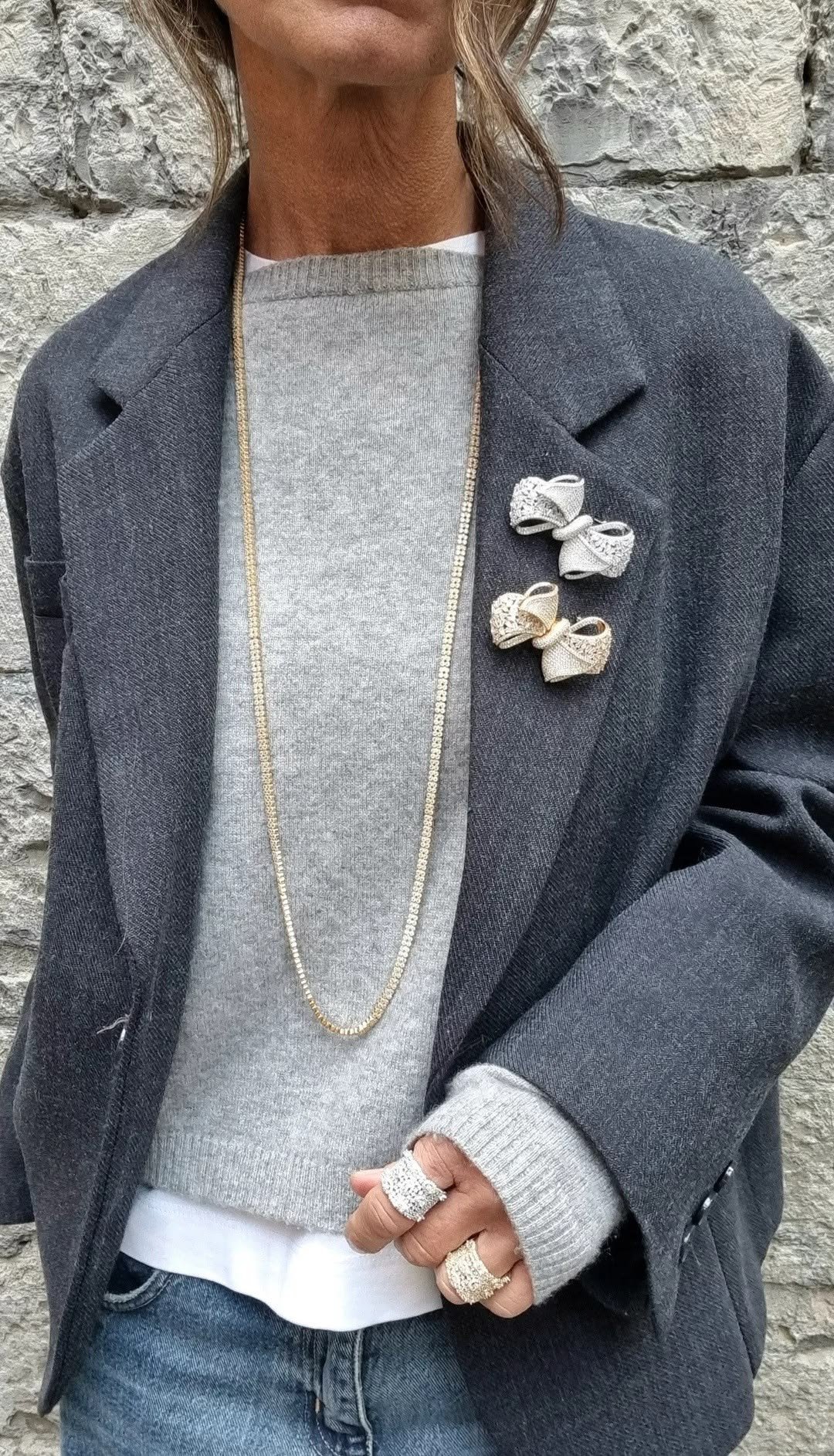
Start with blue jeans, add a white T-shirt, layer a fine gray crewneck knit over it (letting a little of the white hem or neckline show), and finish with a charcoal or dark-gray blazer.
But here's the interesting part: add jewelry —a long necklace, a brooch or two. Statement rings and a beautiful watch. I love that the clothing is classic, while the accessories keep it from feeling anonymous. This is also a perfect example of why I like fine-gauge knitwear so much. It adds warmth without creating too much bulk underneath tailoring.
If you are building your fall layering wardrobe, you can connect this outfit directly to my guide to the best fall knitwear for women. Finish with loafers, ballet flats, ankle boots, or sneakers depending on your plans.
It is ideal for a casual office, a weekend in the city, a coffee meeting, or any day when you want to feel put together without looking like you tried particularly hard.
3. Colored Blazer + Striped Shirt + Tailored Trousers: The Workwear Formula
A blazer doesn't have to be black, navy, gray, or beige: one of my favorite inspiration outfits pairs a soft yellow blazer with a blue striped shirt, gray tailored trousers, a brown leather belt, and pointed shoes. And it works beautifully because the rest of the outfit is so classic: this is probably the easiest way to introduce a colorful blazer into your wardrobe.
Keep the silhouette familiar: tailored trousers, a button-down shirt, and leather accessories, then let the jacket add the unexpected element. Powder blue, burgundy, forest green, dusty pink, butter yellow, or even red could all work depending on your wardrobe.
If you tend to wear lots of neutral tailoring, one colored blazer can also create several completely new combinations without requiring you to rebuild everything underneath it.
Color does not make an outfit less timeless; poor styling does.

4. Cropped Blazer + White Shirt + Jeans: The Modern Classic
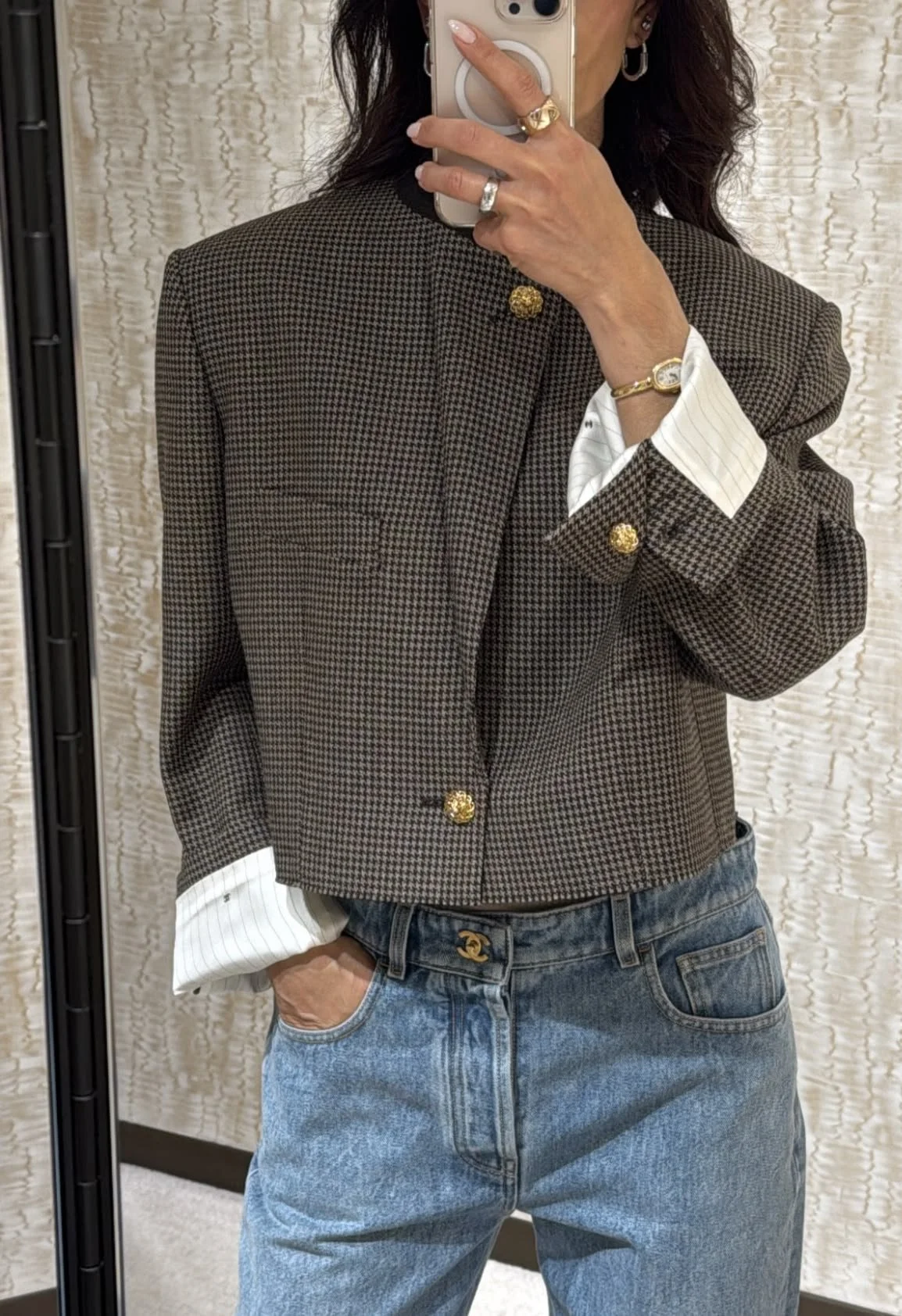
If oversized blazers are not your thing, try the opposite: a cropped blazer works incredibly well with high-waisted jeans. I love pairing a short houndstooth or checked blazer with a crisp white shirt underneath, especially when the shirt cuffs extend beyond the blazer sleeves.
It creates layers without heaviness: the blazer defines the waist, the shirt adds a little softness and movement, and the denim keeps everything grounded. Add loafers, kitten heels, ballet flats, or slingbacks, then finish with a belt and jewelry. Gold buttons or vintage-inspired details work particularly well here because they add character.
This is a great option for women who like tailoring but do not necessarily want the long, oversized silhouette that dominates so much blazer styling.
Personal style always wins over whatever silhouette is everywhere at the moment.
5. Oversized Blazer + T-Shirt + Jeans + Knit Draped Over the Shoulders
This is the formula for the days when you want to look relaxed but still very intentional.
Take a slightly oversized brown, checked, or tweed blazer, add a simple white T-shirt and straight or wide-leg jeans, then drape a knit over your shoulders.
The inspiration I love pairs a soft blue sweater with a warm brown blazer, and that contrast makes the outfit feel more interesting.
The sweater is practical too: if temperatures drop, wear it; if they do not, it becomes part of the styling. Add a small handbag and comfortable shoes, and you have a perfect city outfit.
This is also where the blazer proves that everyday elegance isn’t about dressing formally: it is about creating intention.
The clothes can still be comfortable, the jeans can still be relaxed, the T-shirt can still be basic. You are simply giving the outfit enough structure and personality to feel finished.

6. Blazer + Layered Shirts + Tailored Trousers: For Dinner Without a Dress
This one feels particularly interesting for dinner or cocktails because it is elegant without relying on a traditionally “evening” outfit.
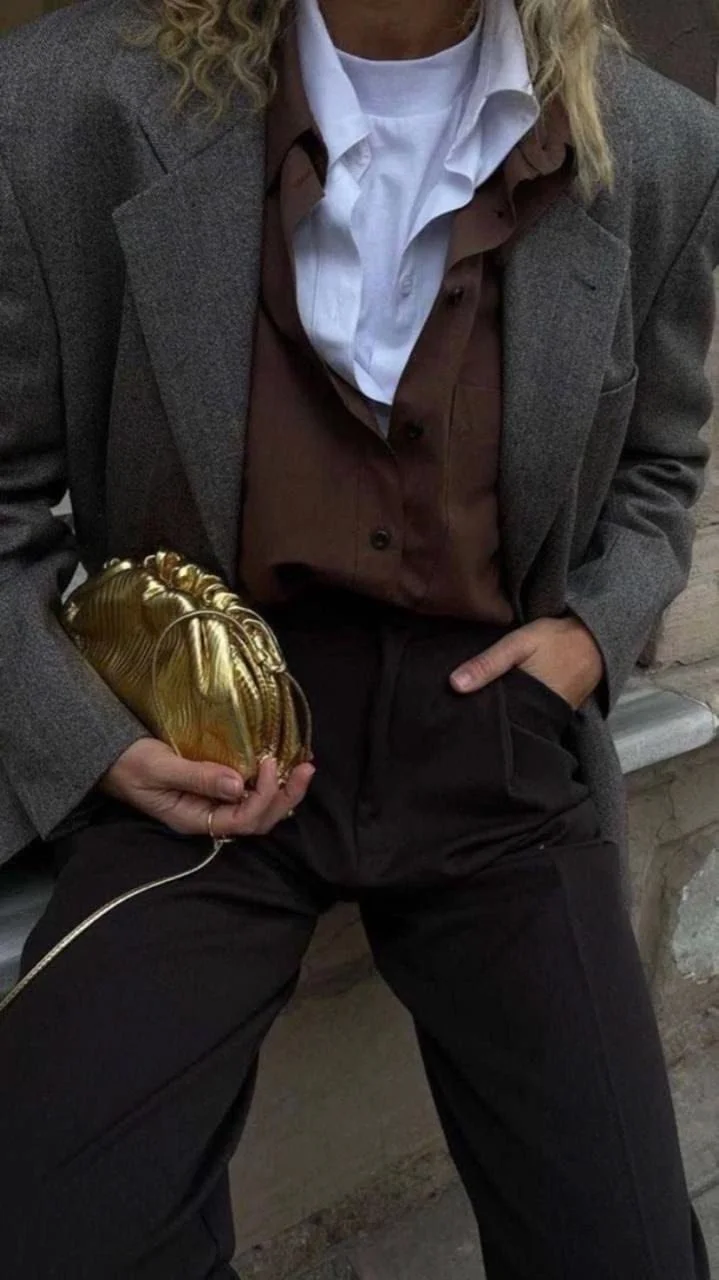
Start with tailored dark trousers, layer a crisp white shirt with a second shirt or blouse in chocolate brown, burgundy, or another rich tone, then add a gray, brown, or charcoal blazer. Let the collars and cuffs show; finish with a metallic clutch or another small statement bag.
The beauty of this outfit is the layering: nothing is particularly extravagant on its own, but several classic pieces worn together create depth. If you tend to reach for a dress when going out, this is a good reminder that tailoring can feel just as special. Add heels or pointed flats, strong jewelry, and perhaps a deeper lip color.
Very little needs to change between office and dinner.
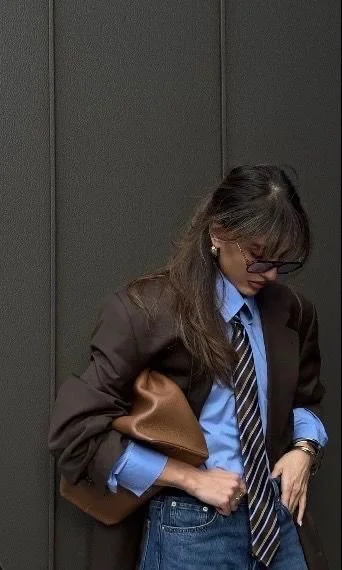
7. Oversized Blazer + Blue Shirt + Tie + Jeans: Borrow From Menswear
This might be my favorite direction because it is exactly the kind of styling that makes classic clothes feel personal.
Take an oversized brown or charcoal blazer, add a pale-blue shirt, wear it with jeans, then add a striped tie. Yes, a tie.
It is slightly unexpected, a little preppy, a little menswear-inspired, and much more interesting than automatically adding a necklace. Finish with a soft leather clutch or shoulder bag.
The key is to keep everything else relaxed: the shirt can be slightly undone, the sleeves can be rolled, and the jeans keep the outfit from feeling too formal.
You could also swap the tie for a silk scarf if the idea feels too far outside your comfort zone, but I would encourage you to experiment.
Some of the best personal-style discoveries begin with thinking, “I’m not sure I can pull this off.” Then realizing you absolutely can.
Bonus: Wear the Blazer With Something It “Shouldn’t” Go With
One of the images I saved combines traditional plaid tailoring with a sporty red jersey, plaid trousers, and bold jewelry. On paper, those pieces should probably be arguing.
Instead, the outfit works because the tension is the point: this is exactly the kind of styling experiment I think becomes possible once you have a good foundation of classic clothes.
Try your blazer with: a sports jersey, a graphic T-shirt, a romantic slip dress, a sequined skirt, an unexpectedly bold necklace, a hoodie, a mini skirt, or another print. Your blazer does not always need to make the outfit more serious.
Sometimes it can simply provide structure that lets everything else feel more playful.

How to Choose a Blazer You Will Actually Wear
Before buying another one, think about the outfits you already wear.
If your wardrobe is mostly jeans and trousers, a slightly oversized blazer might be incredibly useful.
If you love high-waisted skirts or dresses, a cropped silhouette may work better.
If you commute frequently, consider whether the fabric works under your coat and whether the jacket feels comfortable when you sit.
If you want something for work and weekends, avoid buying a blazer that only makes sense with formal trousers.
And pay attention to fabric: wool and wool blends are wonderful for fall and winter; linen works beautifully in warmer weather; cotton and lighter blends can bridge seasons; suede, corduroy, and textured fabrics add personality even in neutral colors.
The most versatile blazer is not necessarily the plainest one: it is the one that works with your actual wardrobe.
Do Not Forget the Accessories
One thing that runs through almost all the inspiration I save is how important accessories are: brooches on a gray blazer, a silk scarf with a brown jacket, long necklaces layered over knitwear, a tie with denim, a metallic clutch, and statement necklaces against traditional checks.
The blazer provides the frame; accessories tell us who is wearing it. And because they are small, they are also one of the easiest ways to make the same blazer feel different every time you wear it.
This is how a wardrobe becomes more interesting without necessarily becoming bigger.
A good blazer can move from work to dinner, from trousers to denim, from dresses to knitwear, from very classic styling to something much more playful. And every time you change what is underneath—or add a scarf, tie, brooch, colorful knit, unusual bag, or different shoe—the same jacket can become something new.
That is why I think the blazer fits so naturally into everyday elegance: it is not about dressing formally every day; it is about using the clothes you already own to make ordinary outfits feel a little more intentional.
Start with the blazer, add what feels like you, and please don’t be afraid to make the classic piece slightly weird.
That is usually where personal style begins.