How to Reduce Mental Load: 7 Simple Systems That Make Everyday Life Easier
This post could not come at a better time because, truthfully, I am overloaded too. Life has a particular talent for making everything happen at once: work gets busy, something at home breaks, an unexpected expense appears, your health needs more attention, a deadline moves up, someone needs you. Then, because the universe apparently enjoys layering, three smaller inconveniences arrive at once.
You know the feeling. Nothing is necessarily catastrophic on its own, but suddenly your brain is holding fifteen open tabs and none of them will stop flashing. I have learned that I cannot always prevent those seasons; sometimes life genuinely is a lot. What I can do is navigate the crisis as calmly as possible, deal with what is urgent, and then slowly rebuild a sense of order afterward, one area at a time. One thing helps me more than almost anything else: writing things down. Anything. Now, it sounds almost too simple, but writing things down removes weight from my brain: the thought is no longer floating around demanding, Do not forget me; it has somewhere else to live. That alone creates a surprising feeling of calm and lightness.
So when I talk about systems, I don’t mean turning your life into a perfectly optimized machine; I mean creating small places for responsibilities to land so your brain doesn’t have to carry everything at once.
Here are seven systems that can genuinely make everyday life feel lighter.
1. Create One Place for Your Weekly Priorities
When everything feels important, nothing feels clear. That is why I start with a simple question: What actually needs my attention this week?
Choose a small number of priorities and put them somewhere visible; I typically keep it to three. My Weekly Planner from The MM Shop is perfect for this because it gives the week a shape without forcing you to schedule every minute. You can see work commitments, personal tasks, appointments, errands, home responsibilities, and a few priorities in one place.
The goal is to stop carrying the entire week mentally: once it is written down, you can look at the page and think, "This is what matters right now.” That is very different from waking up every morning and mentally rebuilding your entire life from scratch.

Discover the perfect tool for achieving your ideal work/life balance with The Weekly Planner. Start setting your goals and creating your vision board today. With 52 undated pages, you can plan your weeks at your own pace, featuring sections for daily schedules, to-do lists, brain dumps, notes, and ideas. At the end of the planner, a Check-in page helps you reflect on your year, celebrate your achievements, and plan your next steps. Start anytime and take control of your time with The Weekly Planner. Order now and begin your journey to a more organized and balanced life!
2. Externalize Recurring Tasks
One of the sneakiest sources of mental load is the list of things that happen repeatedly. These tasks are small, but because they recur, our brain keeps them on permanent standby, and that is exhausting. The easiest solution is to stop remembering them manually: set recurring reminders in your calendar, add them to a dedicated list, or build them into a fixed part of your weekly routine.
The system doesn’t need to be sophisticated; it just needs to remove the question: When am I supposed to remember this?
The recurring things I externalized are recurring payments already set up in my bank app and recurring calendar memos, which I shared with my husband. These two tasks were taking me a lot of brain space, and now everything works so beautifully!
3. Use a “Brain Dump” Before You Try to Organize Anything
This is probably the simplest thing I do when I feel overwhelmed: take a blank page and write down everything; don’t organize while you write, just download. Order doesn’t matter, and grammar doesn’t matter. The page can look ridiculous: your brain is not designed to be a storage unit. It is much better at thinking than remembering twenty-seven unrelated tasks.
Once everything is outside your head, you can start sorting it: urgent, this week, later, someone else can do it, oh, I love this category! No longer necessary. Sometimes, the most reassuring discovery is realizing the giant cloud of overwhelm was actually twelve manageable things. They felt enormous because you were trying to hold them all at once.
4. Separate Big Projects From Everyday Tasks
Another major source of stress is treating a large project like a single to-do-list item.
“Renovate the room.”
“Launch the website.”
“Organize the house.”
Those are not tasks; they are projects.
When you write them as tasks, your brain reads them over and over without ever feeling progress; instead, break them down. This is exactly what my Big Project Planner is designed for.
A large project becomes research, budgeting, decisions, a timeline, materials, appointments, execution, and review.
Suddenly, you are no longer “behind” on one enormous thing; you have a next step, and that matters psychologically. Clarity reduces anxiety because it gives you something concrete to do.

Bring your big ideas to life with The Big Project Planner, the ultimate interactive tool for turning your vision into reality. From brainstorming and goal-setting to branding and launch planning, this planner guides you through every step of your project. Start managing your project like a pro and make your dreams come true—order The Big Project Planner today and embark on your journey to success!
5. Build Default Decisions
Decision fatigue is another huge part of mental load.
What am I cooking?
What am I wearing?
When am I working out?
When am I cleaning?
What am I doing for lunch?
What bag do I need?
None of these decisions are particularly dramatic, but I make dozens of them every day, and my brain gets tired, so I create defaults. The point isn't rigidity; it is removing unnecessary decisions where creativity doesn’t add value.
I don't need to invent a brand-new system for where my keys live every Tuesday: they need a home. The more boring decisions you automate, the more energy remains for the interesting ones.
6. Keep Long-Term Goals Out of Your Daily Mental Space
Big dreams can create pressure when they sit too close to everyday life. This is where I love using a tool like the Digital Goal-Setting Dashboard: it gives long-term goals somewhere to live. You can define the goal, break it into milestones, identify the next actions, and then return to your normal week.
You don't need to wake up every morning thinking, "I still haven't achieved the giant goal."
You only need to know: What is the next reasonable step? That is the difference between carrying ambition and being crushed by it.
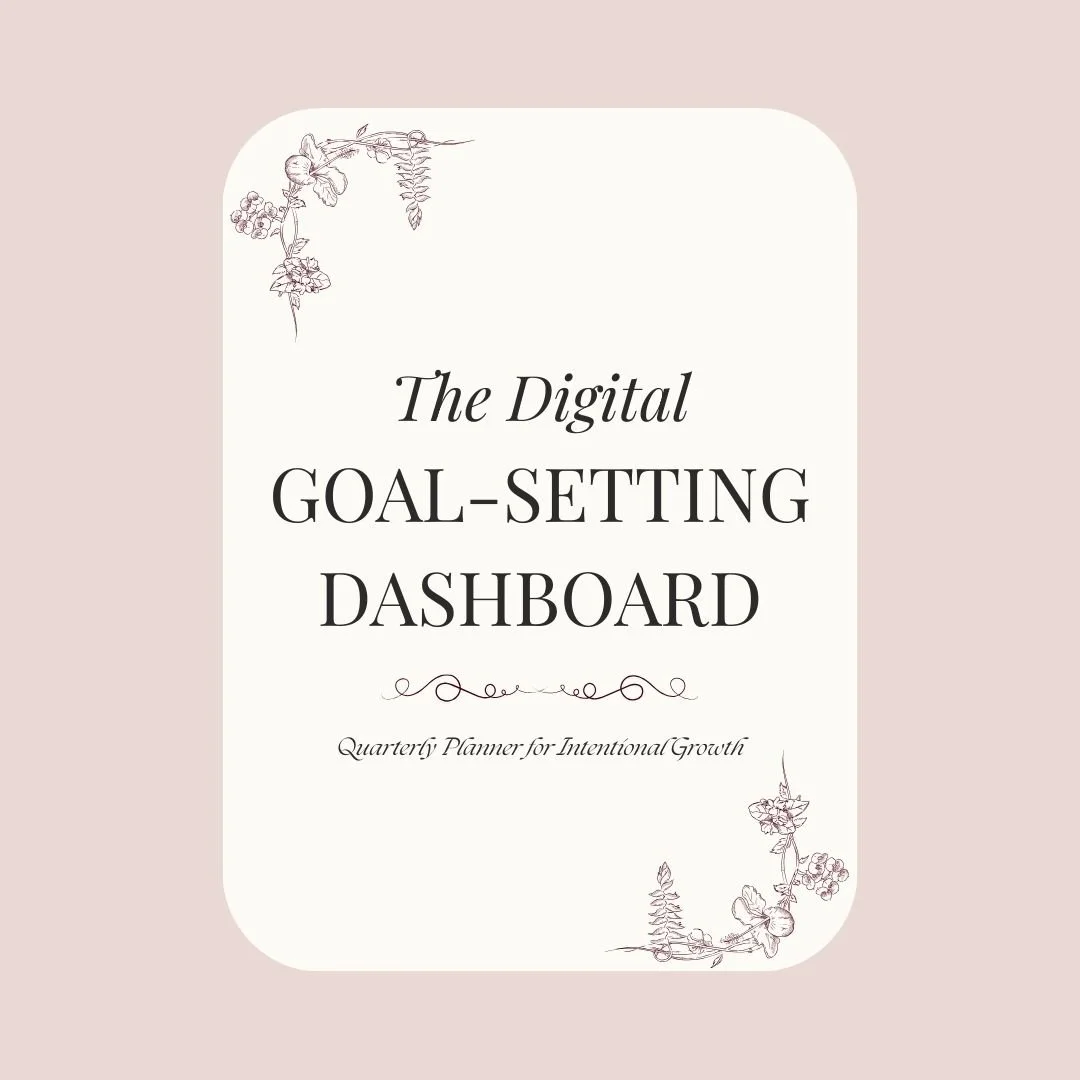
An undated quarterly planner to turn your big goals into a clear 90-day plan you can actually follow.
For ambitious women who know what they want, but need a simple system to turn the vision into action.
Have you ever felt overwhelmed by goals that feel too big, too vague, or too far away to know where to start? This isn’t just another planner — it’s a strategic roadmap that helps you turn your bigger vision into a clear quarterly plan and realistic monthly actions.
This quarterly planner gives you a simple system to:
✨ Clarify what you actually want — and understand why it matters to you
📆 Break big goals into achievable steps — moving from vision to quarter to month
🔍 Track your progress and adjust as life changes — without feeling like you’ve failed when the original plan needs to evolve
🌿 Make space for reflection and well-being — because progress should support your life, not take it over
Designed for dreamers who are ready to turn intention into action. If you love having a plan but don’t want another rigid productivity system telling you that you’re behind, this dashboard gives you enough structure to stay focused while leaving room for real life.
What you’ll receive: one downloadable PDF file, ready to use in apps like GoodNotes or Notability, or to print at home.
Use it digitally in GoodNotes or Notability, or print it at home and make it part of your own planning routine.
7. Rebuild Calm One Area at a Time
This is the lesson I keep coming back to in overwhelming seasons: when life becomes chaotic, we're strongly tempted to fix everything immediately. If life has been difficult, you don't need to recover perfectly right away: choose one area.
I have learned that calm is rarely restored through one dramatic reset: it comes back in layers.
Bit by bit, things begin to feel manageable again.

Writing Is One of the Best Forms of Mental Decluttering
This deserves its own moment because it is so simple and so effective.
Write it down. There is something deeply reassuring about seeing your thoughts outside of yourself: a written task becomes an object; a written problem becomes something you can examine; a written goal becomes something you can break apart.
Words create distance, and distance creates perspective. That’s why planning tools can be so calming when used properly, not because they make us more productive, but because they reduce the amount of life we are required to carry mentally.
Systems Should Create Space, Not More Work
This is the most important rule: if your system becomes another source of stress, simplify it.
Use the minimum structure necessary to make your life feel lighter: the best system is the one you actually use when life is messy, not the one that looks beautiful during a perfect week.
Sometimes life feels organized, and sometimes everything happens at once. That is part of being alive. The goal is not to create a system so perfect that nothing unexpected ever disrupts you. The goal is to build enough structure that when chaos arrives, you have somewhere to return.
Deal with what is urgent, write down what is not, let your brain breathe, then, when the crisis passes, rebuild your sense of calm one area at a time. Structure should never make your life feel like one enormous productivity project; it should do the opposite: it should take some of the weight off your hands so you have more room to live.
And sometimes, the first step is as simple as finding a blank page and writing: here is everything I am carrying right now.