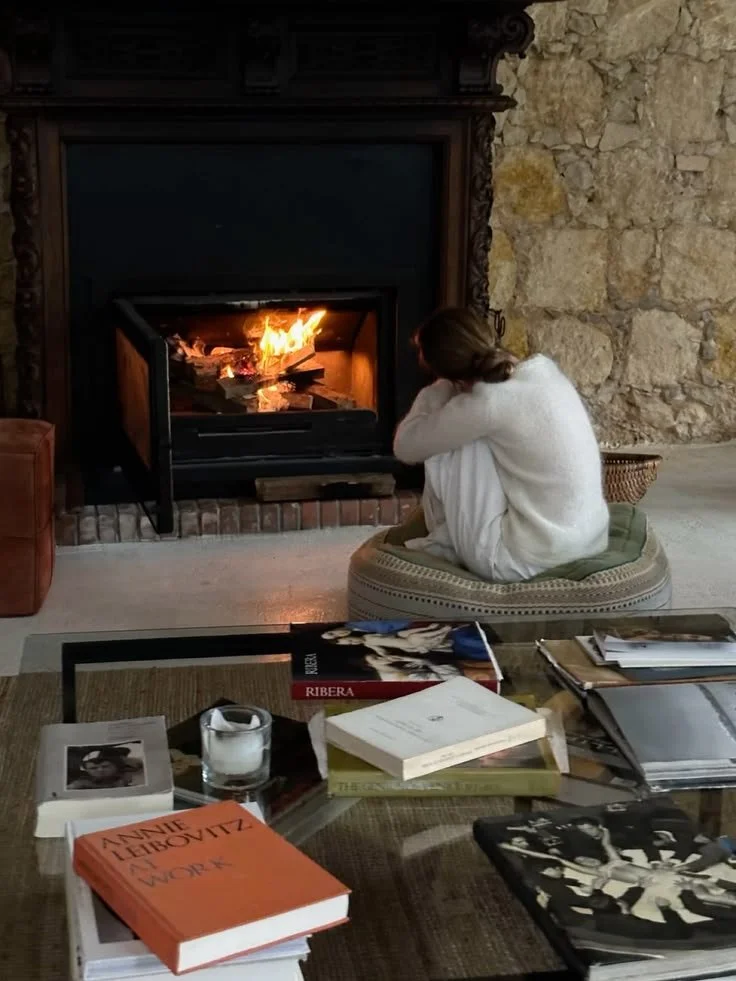
Fall and winter evenings completely change the rhythm of the day: the light disappears earlier, the temperature drops, home suddenly feels more inviting, and even if the day itself has been full, busy, noisy, or slightly chaotic, the evening can become a little place to land.
I think this is one of the reasons I love seasonal routines so much: they do not need to be dramatic; a beautiful evening can be very simple.
A warm drink, music, a good book, a few minutes tidying up, preparing tomorrow's clothes, writing something down, taking care of your skin, doing one small thing that reminds you that your life deserves attention even when nobody else is watching: that is what I want my fall and winter evenings to feel like.
Start by Changing the Atmosphere
One of the easiest ways to shift from daytime energy into evening energy is through music. I have been enjoying seasonal playlists so much lately: sometimes I play my favorite songs; other times, I reach for Lydia Millen's Spotify playlists because they give me exactly the feeling of the season I want. Music changes the energy of a room very quickly.
You do ’t need to do anything elaborate: put on a playlist while making dinner, folding laundry, doing your skincare, reading, or tidying the kitchen.
It turns ordinary tasks into something much more enjoyable, and I genuinely think that matters because most of our life is not made of extraordinary events.
It is made of evenings like these.
Close the Small Open Loops
Before I completely switch off, I like to close the tiny things that would otherwise follow me mentally into the next day. This is not the time for a complete life reset; I mean the small open loops: answering one important message, putting something back where it belongs, checking tomorrow's schedule, preparing something I know I will need, or writing down a thought I do not want to forget. Sometimes mental clutter comes more from tiny unfinished things than from large ones. If my brain keeps repeating, “Do not forget this tomorrow,” I would rather write it down and let it go.
This is where the Weekly Planner helps. I can quickly look at what tomorrow holds, check the priorities, and stop carrying them mentally through the rest of the evening. The key is to stop once the planning is done; the evening should still feel like evening.

Discover the perfect tool for achieving your ideal work/life balance with The Weekly Planner. Start setting your goals and creating your vision board today. With 52 undated pages, you can plan your weeks at your own pace, featuring sections for daily schedules, to-do lists, brain dumps, notes, and ideas. At the end of the planner, a Check-in page helps you reflect on your year, celebrate your achievements, and plan your next steps. Start anytime and take control of your time with The Weekly Planner. Order now and begin your journey to a more organized and balanced life!
Prepare Tomorrow Without Living in It
I've talked about my evening reset routine before, and this is where the practical side of that habit fits beautifully into a cozy night. I check the weather, lay out what I am wearing, choose my bag, make sure I have the essentials I will need, prepare food if necessary, and set my alarm. None of this takes long, but it removes so much friction from the next morning.
And that matters even more during fall and winter when waking up in the dark can already make getting started feel slower. A few thoughtful minutes tonight can protect tomorrow's energy.
Then you can stop thinking about tomorrow and come back to the evening you are actually living.
Make Warmth Part of the Ritual
There is something deeply comforting about warmth during the colder months: a shower, a blanket, a warm drink, soft socks, a knit you love, a hot water bottle, or a lamp instead of the brightest ceiling light in existence.
These little things seem insignificant, but they change how home feels, and to me, that is part of everyday elegance.
The kind that makes your own environment support you.
Let Skincare Become a Signal
I like skincare at night because it creates a physical signal that the day is ending. It does not need to involve ten products: cleanse, moisturize, do what your skin needs.
Done.
The purpose isn’t to turn the bathroom into a laboratory: it is to create one small moment where you stop rushing.
The same applies to hair: a silk bonnet, a protective hairstyle, or a small nighttime ritual can make the morning easier while also giving the evening a sense of closure. These are tiny gestures, but they build a feeling of care.
Read Something That Is Not Trying to Improve You
I love reading in the colder months.
Something about a dark evening, a blanket, and a book makes the season feel exactly right, and I think it is especially valuable to read something that is not always trying to make you better.
Not every book needs to improve your productivity, teach you a strategy, optimize your finances, or fix your habits.
Sometimes you need a novel, a fantasy world, a romance, a mystery. Something that lets your brain go somewhere else or dream for a while. Rest is allowed to be enjoyable.
Use Winter Evenings to Curate Your Hobbies
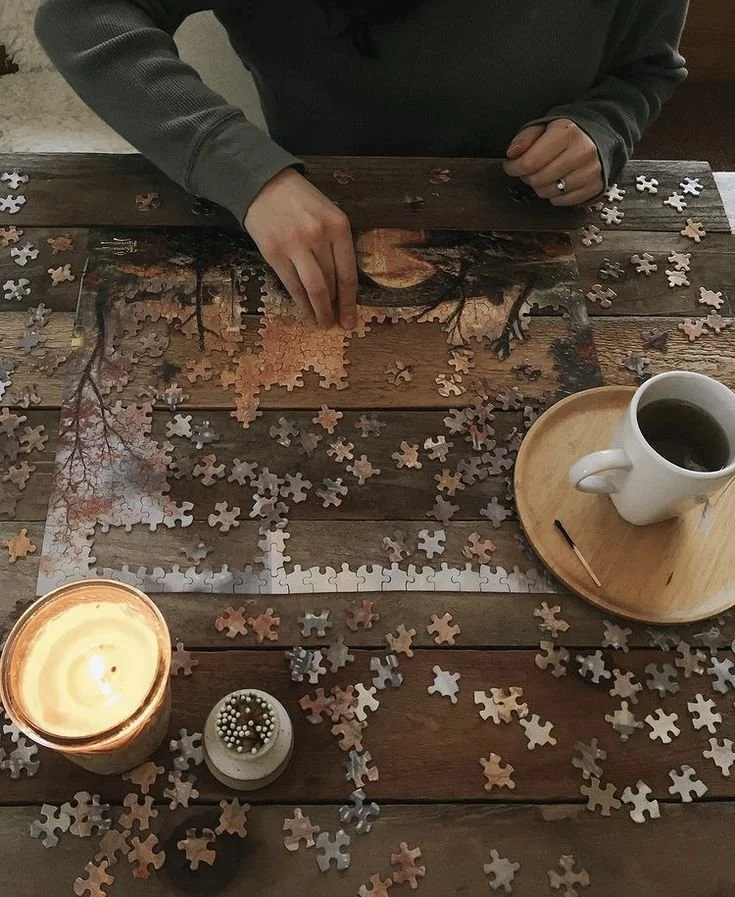
Colder evenings are also a great time to reconnect with hobbies because they add texture to life: sewing, reading, cooking, knitting, journaling, drawing, gardening research for spring, learning something simply because you are curious, working on a puzzle, or watching a movie you have wanted to see forever.
These evenings give us a natural opportunity to stay home more. That can feel restrictive if we see winter only as the season when we cannot do certain things, or it can become the season when we finally have more space for the things that naturally belong indoors.
That shift in perspective changes a lot.
Reflect on Your Goals Without Turning Them Into Pressure
Fall and winter evenings are also perfect for reflection: you can revisit your goals, look at your projects, ask yourself what still matters, write about what you want next, or notice where your life is now compared with where it was a year ago.
This is where I love using something like the Gratitude & Wellness Tracker.
It gives you a place to notice what supported you, what felt good, what you are grateful for, and what your energy looked like.
Reflection should give you clarity, not another reason to feel behind.

Bring Calm, Clarity & Joy Into Every Day
Imagine waking up each morning feeling grounded, grateful, and ready to face the day with intention — not overwhelmed by your to-do list.
The Gratitude & Wellness Tracker is your daily companion for nurturing inner peace, boosting well-being, and transforming simple routines into nourishing self-care rituals.
Designed to be used on your device or printed at home, this digital journal helps you:
Start every day with gratitude — gently shift your mindset to focus on what truly matters
Track mood, energy & habits — understand patterns and make mindful choices
Celebrate small wins — because progress isn’t only big milestones
Feel more intentional with your time — cultivate routines that support your best self
Whether you’re craving more calm in a busy world or building a wellness routine that sticks, this tracker is your daily invitation to slow down, reflect, and feel more connected to yourself.
Easy to use + works on any tablet or printable at home — so you can customize your experience to your needs and lifestyle.
Make a Vision Board
This is also a great season for a vision board because quieter evenings give you time to actually think.
What kind of life are you trying to build?
What do you want more of?
What do you want less of?
What kind of home do you want to live in?
How do you want your days to feel?
What are you working toward?
What would make next year feel meaningful?
A vision board does not need to become a magical prediction tool. For me, it is a way to make your desires visible, notice patterns, remember what you care about, and sometimes realize that parts of an old vision board are already sitting around you.
That can be incredibly grounding.
Journal Before Bed
Nighttime journaling remains one of my favorite rituals. It helps me decompress, download thoughts, and notice emotions.
Write down something I don’t want to carry into sleep: sometimes I write a lot, sometimes barely anything. There does not need to be a perfect format.
If you need help to start, you can ask yourself:
What happened today?
What am I proud of?
What is still on my mind?
What can wait until tomorrow?
What felt good?
What do I need?
Sometimes the simple act of putting a feeling into words makes it feel smaller and more understandable.
That is enough.
Keep the Phone Away From the Bed
One of my favorite habits is sleeping without my phone in the bedroom.
It gives the evening a real ending: no final scroll, no notification entering my head at midnight, no waking up and immediately reaching for everyone else's world before I have even entered my own.
The colder months already invite us inward. I think protecting that final part of the evening helps us actually experience it.
How do I do with my alarm? I invested in a sunrise-and-sunset clock that also works as an alarm. The best gift I gave myself. It changed my bedtime routine immensely because I can wake up with a gentle sound and the sunrise simulation. During the evening, I can play white noise, do a little color-light therapy, and fall asleep with a serenity I didn’t have with my phone.
Your Cozy Evening Routine Can Be Very Small
This is the part I care about most: you do not need to do everything in this article every night.
The point isn’t the exact routine; it’s creating a transition between the demands of the day and the part of life that belongs only to you. Fall and winter evenings can feel very different depending on how we look at them. The darkness can feel limiting, or it can invite us to slow down.
The cold can feel annoying, or it can give us a reason to make home warmer.
The quieter calendar can feel boring, or it can create space for hobbies, reflection, reading, creativity, and rest.
Sometimes caring for your life means creating enough warmth and quiet to enjoy being inside it.